A World Built, Part III.

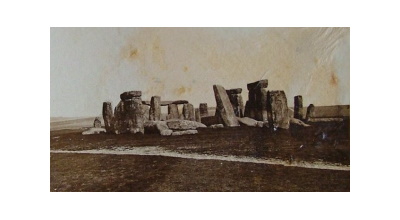
Stonehenge in 1877
Picture of Stonehenge from 1877, public domain, courtesy Wikipedia

We’re not sure exactly how it started, this world we have now. Archaeologists and other scientists are still figuring that out, and they’ve got theories. Some of the latest at the time of this writing can be found in Sapiens: A Brief History of Humankind, by Yuval Noah Harari, if you want to dive into it.

So far, the story of our past has been revealed as far as our origins and migration from what is now the Southern part of the continent of Africa. Were we hunters and gatherers? Were we tribes? Probably, though the tribes were most likely opportunistic in what we ate. The world provided. Migration was part of the survival of our ancestors, since we didn’t cultivate things.

While theories may vary, our ancestors wandered around, ate, and procreated. We figured out communication, and while we likely communicated about that saber-toothed tiger at the watering hole nearby, it’s also likely we communicated about what was happening in the tribe. “Biff is out hunting, so Alana is entertaining Atouk in the cave.”, perhaps with a knowing wink. Gossip, which supported the social organization of the tribe.

The Internet shows not that much has changed in that regard. In reading updates on Twitter today, in the middle of all the things about Ukraine, troubles of democracy in the United States and the United Kingdom, Russian propaganda and the latest things escaping China’s iron firewall, there was some silly article about someone I don’t care about wearing Versace. That it showed up in my feed is likely because other people I know found it popular enough that Twitter offered it up as something I might be interested in. It’s gossip about what people are wearing. Nevermind the odd fetish with Elon Musk’s every bit of reverse flatulence.

The point here is not what we talk about, but that we do. While times have changed and every now and then the metaphorical saber-toothed tiger pops up, most of the time it’s about other people. The technologies have shifted, from our discovery of writing, to radio, to television, to the Internet. We communicate about things that are important to us as individuals even though they may not be important at all, at least on the surface.

Let’s go back to those tribes migrating from what we know as the southern part of the African continent. Certainly, some left because other tribes were eating their own food, perhaps even establishing territories. Some may have left because they wanted to see what was over there, the part of us that enjoys exploring. Or maybe Biff caught wind of Atouk and Alana and, in an early version of a romance novel, they eloped and made their own way up north without Biff, forming their own tribe. Nobody really knows how that all went, and the likelihood is good we will never know.

This continued, trekking across land bridges, going here and there. Of course, Homo Sapiens weren’t Homo Sapiens yet, and we encountered variations of ourselves. We’re not sure what happened there, whether they integrated or not, but as an example neanderthal DNA has shown up in some people. We were busy eating and having sex in the caravan of life, scattering across the world for whatever reasons we had.

We would later figure out agriculture and form societies in place. This required more structure, and our language evolved as our structure did. Everywhere there were people, people did things at least a little bit differently, and having moved beyond basic twig technology, we built cities. Some of us built early ships to fish, or to see what was over there, or to trade. Trade likely happened before our societies became stationary, but it truly evolved when we stayed in one place. Some places had some things, other places had other things, and so societies traded. Currencies became a part of this.

Other things happened. We developed nations with borders that were usually demarcated by what we thought were permanent landmarks. Water was a great boundary, or so we thought. The border of Guyana and Venezuela proves that this is not so even to this day. Other boundaries were negotiated, agreed upon.

Borders are fictions we created to keep us from them. It’s territorial, and while a fiction it’s an agreed upon fiction. It’s real in that regard, but the concept of borders themselves is something we just made up so that the influence of the fictions of one nation don’t overlap into another. What’s more, it became recursive with personal property, where there are borders between properties, with associated drama. Currencies are much the same thing.

The laws societies chose to live by were also agreed upon fictions. Some would say that there was morality involved in these laws. Some theologians claim that the morality came from some omnipotent being that no one has evidence of other than someone millennia ago scribbled something down, and work from that faith – which is perfectly fine. I’m of the camp that morality is based on empathy, and theology reinforced it. Fighting over that doesn’t seem productive so I don’t bother. The point is that we found ways to live in larger groups rather than splitting off all the time into tribes that wandered off to find somewhere else to be – though that does continue to happen, albeit rarely and not in a while. The Mayflower comes to mind.

Our societies are based on mutual agreements, social contracts, that are mutually agreed upon fictions. We see this now as Russia’s unprovoked aggression continues to cost lives in Ukraine of not just Ukrainians, but people from around the world who answered the call for the ideals of democracy. Maybe it was too much Sesame Street. Maybe it was too much Disney. Maybe it was too much about how good democracy is when it’s just the best choice we’ve come up with, and we haven’t figured out how to institute it homogeneously. Where wars of the past have been less clear, the war for Ukrainian sovereignty has a ring to it that we find right, whereas the actions of Russia – unless you have a steady intake of Russian propaganda – are wrong.

This is an interesting example not because it’s happening now, or because I’m solidly in the camp of supporting Ukraine. It’s because for at least a hundred years, Russia has written the history of those within it’s empire which, unlike most European empires, was landlocked. Rather than going to visit old relatives and subjugating them, as European empires did, Russia’s history is one of picking on the people it could get to once the Tsardom of Russia gained prominence after the influence of the various Khanates that were derived from the Golden Horde were defeated or waned. The Tsardom was that of war and expansionism, Imperial in nature, and was brutal as most empires were at the time. What Spain was doing in South America in the 1500s against indigenous peoples, the Tsardom did to it’s neighbors to expand. This is a simplification. To get into it completely, I offer you should read any history about Eastern Europe not written by someone from Russia.

Empire is about getting rid of those that disagree with the empire, or subjugating them. Language, religion… all of these things are a part of colonialism that a large portion of nations suffer a hangover from to this day, with borders drawn by former empires that those who lived there had no say in. The history of Eastern Europe is largely overlooked in this context because the rest of Europe was busy fighting with their neighbors over lands far from their shores.

That colonialism extends to this day, though it’s more popular to talk about hegemonies now. Most of the world has moved on from colonialism though former colonies, their riches depleted by former empires, have not done as well – which is understatement.

There is something awkward about some humans using sailing technology to go visit old relatives and subjugate them, but then at the same time people were still figuring out that the world was not flat despite the protestations of religion. You’d think that might have made it into a religious text. Perhaps there will be updates on the religious texts soon, but I wouldn’t hold my breath.

With all of this going on, people were forced to look at the world through the eyes of those that ruled them, and if you decided to go back to nomadic roots, you had to pick the place with the fictions you liked or, if you were lucky, go start your own somewhere – as happened with the United States.

Then we have the ideologies of government, with Communism, Socialism, and Democracy. Democracy, while imperfect and hardly standardized around the world, has been adopted by the majority of nations on the planet not because it’s the best but because it’s the best we have. Yet even in a democracy, the systems are gamed.

All of these things are, at their core, things we agreed upon to an extent. One may be better off having been born into a democracy by accident of geography, but that hardly means that what that nation does is something the individual agrees with because there are gaps in representation.

A lot of this is at least appears broken right now as the world, which doesn’t agree to any of our fictions, dances across borders with pandemics and climate change. When there should be more work as a global society, we see more isolationism. When our species could be considered an organism living in an ecosystem, we hardly act it.

Yet we remember how to play with toys and are guided by them, and our methods of communication are influenced by a few outside of democracy.

Maybe it’s time to revise some fictions.
The Tales of 3 Beans.

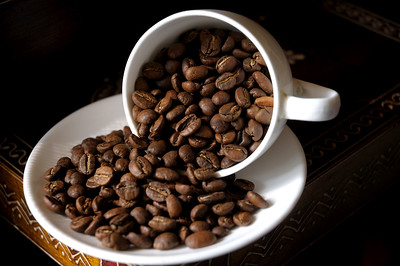
As a followup on ‘Beyond Colonialism’ and a prelude to a few other things to come, we segue into the history of 3 beans: The Coffee bean, the Cocoa Bean, and the Enola Bean. Two, everyone uses daily and is quite familiar with.

We’ll start with coffee, with an overview.

Coffee’s roots started in Ethiopia. There’s a legend that a goatherd by the name of Kaldi found his goats acting funny and decided to try the beans that they were eating, somewhere around 850CE, or AD, whichever makes you happy. From there, it made it’s way to across the Red Sea to Southern Arabia (modern Yemen), purportedly by Sufi Imam Muhammad Ibn Said Al Dhabhani sometime in the 15th century.

Coffee was first exported out of Ethiopia to Yemen by Somali merchants from Somaliland (now a part of Somalia), which was procured from Harar (Eastern Ethiopia) and the Abyssinian interior. In Yemen, coffee became popular with Sufis for their praying, and the Mamluk Sulphate got the bean and it spread to Mocha (a port on Yemen’s Red Sea Coast). Note: nothing to do with chocolate.

In 1511, it was forbidden until 1524, when Ottoman Turkish Sultan Suleiman I overturned it. Coffee houses sprouted up in Cairo and Syria, and in 1532 a similar ban showed up in Cairo.

Meanwhile, it had spread to the Ottoman Empire and the Safavid Empire, and through the Battle of Mohács between the Kingdom of Hungary and the Ottoman Empire. Hungary lost and in 1529, the Siege of Vienna had the same Turks take coffee to Vienna. In the 16th century, coffee made it to Malta by way of slavery: The Ottomans tried to take Malta in the Great Siege of Malta, some were enslaved by the Knights Hospitaller, and they brewed their traditional coffee while there for money. Coffee shops opened.

The Republic of Venice, a thriving port trading with North Africa, Egypt and the East, moved coffee and it became a drink for the upper class there, with a coffee shop opening in 1645 while making it’s way to Europe.

Meanwhile, the Dutch got some hands on some plants in the 1600s and in their colonies began growing – and within the next century, almost all of Europe were using colonies to grow coffee.

The history of the coffee bean involves battles between empires, slavery and sneaking around with coffee beans in the hope they would grow somewhere else. The slaves procured and sometimes prepared, the upper class drank coffee.

Now you, gentle soul, can drink coffee like a Sultan a millennia later. 

The cocoa bean’s use in human society dates back to 1,000 BC as far as we know. Whether the Olmec or Maya first used it is a question since our history of that time is limited – but we do know that the Spanish initially found no interest from the palate of Columbus, where he was gifted some by an Aztec chief in 1502, and who had some cacahuatl prepared from the beans. He did not like it, and so the Spanish Court didn’t hear much about it until after Hernan Cortes showed up in 1519. In the interim, the bloody Spanish colonization of the Americas was already underway in looking for gold, with the Mayans maybe drawing first blood in 1511 when the Spanish aboard a wrecked caravel were sacrificed by a Mayan chief, where 2 of the crew escaped. 

In 1521, the Fall of Tenochtitlan took place, aided by smallpox and technology, and was a decisive event for Spain’s colonization of the Americas. Of course, history tends to forget that areas like Cempoala were vassal states of the Aztec who weren’t too pleased with having to send so much tribute to Tenochtitlan because of the human sacrifices, and so the Spaniards allied with such groups to overthrow the Aztec. There was empire before European empire, and the fragility of that empire was exploited well by Europe. This would not be the last time a European nation would do this, but it was quite likely the first time outside of Europe.

Cortes found value in the cocoa drink over time because colonization is a thirsty business. When he did make it back to Spain in 1544, he explained how the beans were used as currency, how to prepare the drink, and cocoa’s military significance: “One beaker keeps a soldier fresh for the whole day.”

That same year Mayan nobles showed up in Spain – I’m not sure if they were with Cortes or not, but I suspect that they were given sailing times back then – and they brought with them cocoa beans. In 1585, the first commercial importation of cocoa beans arrived in Spain where it became a popular drink, enough so that in 1591 there was some religious question as to whether imbibing it during Lent was allowed. The Jesuits, who were involved in the trade, took the position that drinking hot chocolate during the Lenten Fast was fine. The Dominican Order, or ‘Black Friars’, disagreed – and so this went to the Pope Gregory XIII who said it was fine to partake of the drink during the Lenten period.

The commerce of the cocoa bean thus got the Pope’s blessing, and sugar, another plantation crop of the colonies, was added to counter the bitterness of the cocoa. It made it’s way around Europe, and when the Industrial era hit, Europe’s interest in cocoa caused innovation for mass consumption which has evolved to the present day. Cocoa itself is not grown in Europe, and yet, Europe built a massive industry around cocoa and sugar, born on the backs of those subjugated from as far away as Africa (slavery) and later India (indentured labor) until slaves were freed and the indentured laborers had run their terms and could not get enough space to get back to India.

And this is why you can drink chocolate drinks, or eat chocolate, all over the world now, manufactured far from where the cocoa is grown.  

The Enola bean, made available through a creative commons license per this link.

In 1999, the enola bean was patented, with the only distinguishing feature of the Mexican yellow bean being it’s particular shade of yellow. This was something I followed with great interest at the time because it seemed so ridiculous, and was a great example of biopiracy – something that could be said of the two other beans above, coffee and cocoa, though they had the misfortune of not being appropriated in modern times.

The owner of the patent actually sued anyone who was importing the bean that matched the shade of yellow in their patent, causing a massive decrease in importation from Mexico, impacting around 22,000 Mexican farmers. This was all over the color of the bean, not something as original as coffee or cocoa which were in and of themselves original and exploited. It was a manufactured exploit, one which natural selection and natural pollination would create independently.

The bean itself is not that interesting. Why did I add it in here? The reason I did was because laws were exploited rather than offerings of smallpox, swords and muskets. In the modern age, this is how the laws of nations can be exploited. Fortunately, in 2005 the United States Patent Office ruled in favor of the Mexican farmers and in 2008 they threw out the patent on the Enola Bean.

Such cases, such as like with the neem, caused India to create a database of traditional knowledge to protect knowledge of India from others – an exercise in sovereignty that not many nations have done or could do given their shorter histories of written works.

The Convention of Biodiversity, (CBD) established in 1993, has been criticized for not doing enough – and, of interest, 196 nations have ratified, acceded or accepted the CBD. The Holy See and the United States, noteworthy because of Enola Bean for the latter, have not.

Beans. These are just three beans that show exploitative history. Three beans we take for granted in the modern world.

Go into the kitchen and find something you use every day. I’m sure you can find an interesting history.

Beyond Colonialism.

PutinColonizationToday, Vladimir Putin made quite the statemet regarding sovereignty and colonies. The truth of the statement is without question. There is no in intermediate state: either a country is sovereign or it is a colony. He went on in a video to say (translated):

“During the war with Sweden, Peter the Great didn’t conquer anything, he took back what had always belonged to us, even though all of Europe recognised it as Sweden’s. It seems now it’s our turn to get our lands back [smiling]

The world might view that differently if it was Boris Johnson or the Queen saying the same about the former English colonies, or Macron speaking of the former French colonies.

The difference, as more than one person of pigment has told me in so many words, is that Ukrainians are not people of pigment. They’re white.  And, as has shown up more than once, while bad things are happening in other parts of the world, Ukraine seems to be sucking the air out of the room. “What about Syria? Palestine?” I heard more than once. Some were clear trolls on twitter, some not, but when it gets left hanging, it reinforces the view that the only difference between Ukraine and these other places, from the Congo to Palestine, are a matter of color.

To an extent that might be true. There’s also the issue of land mass, proximity to EU nations and the UK, it’s supply chain of wheat and lithium, and, an interesting thing that almost no one pays attention to: language. In Ukraine, while Russian and Ukrainian are spoken, the major cities have are able to speak the languages of people outside of Ukraine – like English, which we who read this have some grasp of. Nevermind the religious aspects, such as Christianity. In many ways, what isn’t a part of the EU looks a lot like a member of the EU.

Then, there are the nuclear power plants where a nuclear power that threatens using nuclear devices gets more nuclear plants.

The spokespeople from the start have been, aside from President Zelensky, well articulated Ukrainian women. That may have had an effect too; I don’t know, but it was markedly different.

Democracy, sovereignty… a nuclear power not just being dishonest from the start, but being dishonest throughout. Yes, we have seen that before, and we didn’t like it. The New York Times even apologized. Military members were prosecuted for abusing positional authority, which in some instances is a kind way of putting it. Too kind, in my opinion, but the point was that it was bad, and we know that.

What’s not talked about is the past of Ukraine beyond ‘it was once a part of the USSR’. An entire generation, has been born since the fall of the USSR, but the veil of colonialism persists beyond it’s fall, just as the colonial past haunts former colonies made independent just in the last century; 2 or 3 generations.

I’ve been biting back a post on colonialism for some time as I listened to Ukrainians speak in the Ukrainian Spaces on Twitter. It brought up some old conversations had at the first CARDICIS in St. Lucia, in 2004, where I found myself sitting beside a Carib chief at times, where the melting pot of the Caribbean met to talk about culture and ICT. I’d thought I was invited by mistake, but intrigued I went anyway and the experience changed the way I viewed the world. What I heard in the Ukrainian spaces was almost exactly what I heard at CARDICIS, only with a different accent.

CARDICIS had commonalities, and the point of the exercise was to transcend differences in whose colony left what language where, and to recognize the deep diversity of the Caribbean and what separations there were – and building bridges across them. It worked to a degree, but there’s only so much one can do against the inertia of various cultures.

Thus, it was peculiar after 18 years to sit, listening in spaces on Twitter, about the Ukrainians talk about the Russian imperialism while in the same breath wondering why there wasn’t more support for Ukraine in Africa, India, Latin America and the Caribbean. And I cannot help but wonder how the insulation may have worked both ways. In trying to communicate with some speaking out about how colonialism impacts Ukraine, I was met with silence. They are a bit busy making their case to the world, and I think the case would be made better if they made it to a broader audience who could sympathize and not just empathize. Still, it’s not my case to make.

There’s a plurality in Ukraine of people who, over hundreds of years, have not had a great relationship with the former Russian empires. Crimean Tartars, Roma, Cossacks… the list goes on. The people of Eastern Europe, it ends up, surprised the world with ‘revelations’ that they knew all too well and which we didn’t. It’s plausible that it works both ways.

There’s the recent reaffirmation of ‘regrets’ by Belgium’s King regarding the colonial past in the Congo. There’s the issues being discussed about the United States territories in the context of colonialism. Egypt had the Cairo Punch, started in 1908, had it’s satirical illustrations of nationalism and colonialism. There’s Britain’s Windrush Scandal, among many other things related to colonialism brought to the fore on the Queen’s Jubilee (Happy birthday, by the way, I forgot to send a card). The University of Texas at Austin even has a recent article about how the Legacy of Colonialism Influences Science in the Caribbean. and while I’m not familiar with the ins and outs of India and it’s complexities, this line by Amit Shah, Union Home Minister, is a powerful line to write 75 years after India’s independence:

“No one can stop us from writing the truth. We are now independent. We can write our own history,” he said.

75 years after independence from Britain, in a large nation, a nation with nuclear weapons but not falling under the definition of ‘nuclear power’ (an interesting read), has someone being quoted as saying that.

Colonialism and it’s effects are everywhere, and it’s generally omitted in it’s effects across media. What’s the cure? Well, developmental aid doesn’t seem to be working, according to this this article about development aid:

“…We should not be surprised that the aid industry keeps itself busy, year after year, without ever getting closer to what should be its goal – a world without aid. Industries and institutions seek not merely to perpetuate themselves, but to grow. The aid industry has no intention of ever packing up and going home. On the contrary: the UN announced eight development goals and 18 targets in 2000. In 2015, that grew to 17 goals and 169 targets….”

So, what is the answer?

The first step, I think, to move beyond colonialism is to find others with common issues, and one of the more common issues is the isolation from others, such as in the Caribbean even the next island over, by language, by culture, and by economic connection.

Colonialism is more of a common issue than most people think- with only a few articles linked here from the plethora on the Internet, which of course leads us to the Digital Divide, technocolonialism – other things I’ll be writing about soon.

For now, as the world becomes more aware of the voices in Ukraine speaking of the Russian empire, there are those speaking of the European Empires even as 2-3 generations later, former colonies are still recovering… maybe the best answer is to find the commonalities and build from there. As the narrative was at CARDICIS, we all cook, we all eat – but everyone’s food tastes different because of the different ingredients and balances of the ingredients.

There is much to learn from those different balances and different ingredients.

Colonialism, Ukraine and the Caribbean Perspective

It was a quiet day in Trinidad so I opted to go have a beer, which of course lends itself to another beer. During that time I struck up a conversation with a woman who, when the invasion of Ukraine came up, she said easily that she supported Putin. Mind you, she did not say Russia, but Putin, which is interesting in how the world characterizes the conflict.

She knew I support Ukraine when she said it, and there was no animosity in how she said it, so I asked her why. She looked at me perplexed, and I said, “Well, we’re having a good adult conversation, we have different perspectives on something in another part of the world and I’m curious why you feel the way you do.” After a brief pause, she said she was tired of the United States hegemony that Putin talks about.

I nodded in agreement and said, “Yes, that is true, and the past few decades haven’t been the best for the United States and foreign policy.” Honestly, they haven’t regardless of how you feel about anything; domestic issues within the United States have echoed across the world in their conflicted ways with changes of Presidency, from George W. Bush to the present Joe Biden.

I continued, “Yet the killing of civilians, torture and rapes can’t be easy to support. Like in Bucha.” She looked down, conflicted, as I continued, “Most people I know don’t realize that the Ukrainians were colonized, and that their former colonial masters are trying to take them over again – which would be like the British showing up with warships here and pummeling civilian targets until we were a colony again.”

“Colonized?”

And that’s where the conversation becomes interesting in the Caribbean, and I imagine in Latin America and Africa. ‘Colonization’ is not an idle word, it is a loaded word filled with history, of economics, and of attempting to catch up while some maintain what is called a ‘colonial mentality’. It’s something I’ve heard in Latin America and Caribbean more than once, almost always associated with claims, real and some imagined (completely about personal biases), of racial subjugation, which is probably why Latin America and the Caribbean, and perhaps even Africa, don’t see Ukraine as a former colony of the USSR.

So I compared the Holodomor to the famines in India under British rule. Intentionality in both groupings is a matter of debate by people who like to spend time debating such things, but there is no question that they happened – and in the case of the Holodomor, roughly a decade after the Bolsheviks made a violently convincing ‘argument’ that Ukraine was ‘The Ukraine’. If you wish to irritate someone from Ukraine, call it ‘The Ukraine’. Depending on the context, you may be gently, firmly, or belligerently corrected.

Then I talked about the oil in the Donbas region, which I mentioned not too long ago, and about the messy aspects of democracy and free speech that aren’t permitted in Russia.

The conversation remained pleasant, not a discussion of who was right or wrong. There was searching the internet on mobile phones, and a sincere discussion that lasted for a few beers that morphed into China’s inroads into Trinidad and Tobago, about how economically China has been colonizing former colonies of other nations in Latin America, the Caribbean, and Africa, and how that impacts what we hear. You don’t see much in that regard, but China has sway and where China has sway, the Russian voice is heard more loudly because of China’s benign status about the invasion of Ukraine. There is no form of ‘legal’ invasion, by definition an invasion is illegal. If you want to argue, feel free to tell me when an invasion is legal.

And this leads to the echo chambers of the Global South – in this case, the echo chambers of the Caribbean, Latin America and Africa. People and nations within these regions know well what it’s like when someone else speaks for them and writes their history, yet because they are in the Global South they are most easily influenced by Russian media about fairy tale special military operations occur without the rape and torture of civilians. Yet those fairy tale special military operations where these things do not happen simply don’t exist. And without realizing it, without even questioning because the day to day issues of life keep the brain busy, they unconsciously support the attempted recolonization of those who have much in common with themselves, and in rebelling against one hegemony they support another.

On Ukraine.

Ukrainian FlagThe war in Ukraine has been going on for over a month now. Cities destroyed, civilians killed… and in Trinidad and Tobago, in sharp contrast, 2 weeks into the war the Prime Minister of Trinidad and Tobago suddenly decided to tell everyone that fuel prices would likely go up. The Trinidad and Tobago public was then upset about the price for Kentucky Fried Chicken Condiments, later the Will Smith and Chris Rock controversy. It’s surreal listening to people in Trinidad and Tobago and how easily they miss the important things happening even in their own country. I stopped trying to understand some time ago. There will be those that argue, but they are the minority and if they take a breath they’ll realize that.

I’ve known little of Ukraine. Truth be told, the only reason I know about the Ukraine is because someone who lives near me is from the Ukraine. I haven’t seen her and her child since the war started, and I imagine she’s likely very concerned. Maybe she has even gone back to the Ukraine to be near family, it’s hard to say – I do not know her or her husband well, but I do know that when I first met her she made it exceedingly clear she was not Russian, but Ukrainian. That got me reading the history of the Ukraine which seems to be missed by almost everyone who has an opinion on Ukraine.

When we hear about the present conflict, we hear Ukrainians talk about it going on for 8 years – when Crimea was annexed. Yet the conflict is much older, most recently when the Ukrainian’s People’s Republic was toppled and Ukraine became a part of the former USSR. And even before that, the history of Ukraine is complicated.

If you look closely enough, you find patterns. And if you look more recently, you’ll see an invasion by Russian on a sovereign nation that doesn’t want to be invaded. This, in modern history, is not new in geopolitics but it has the simplicity of being just that: A sovereign nation being invaded. Raped. Pillaged. Plundered. Why?

On Russian Aggression

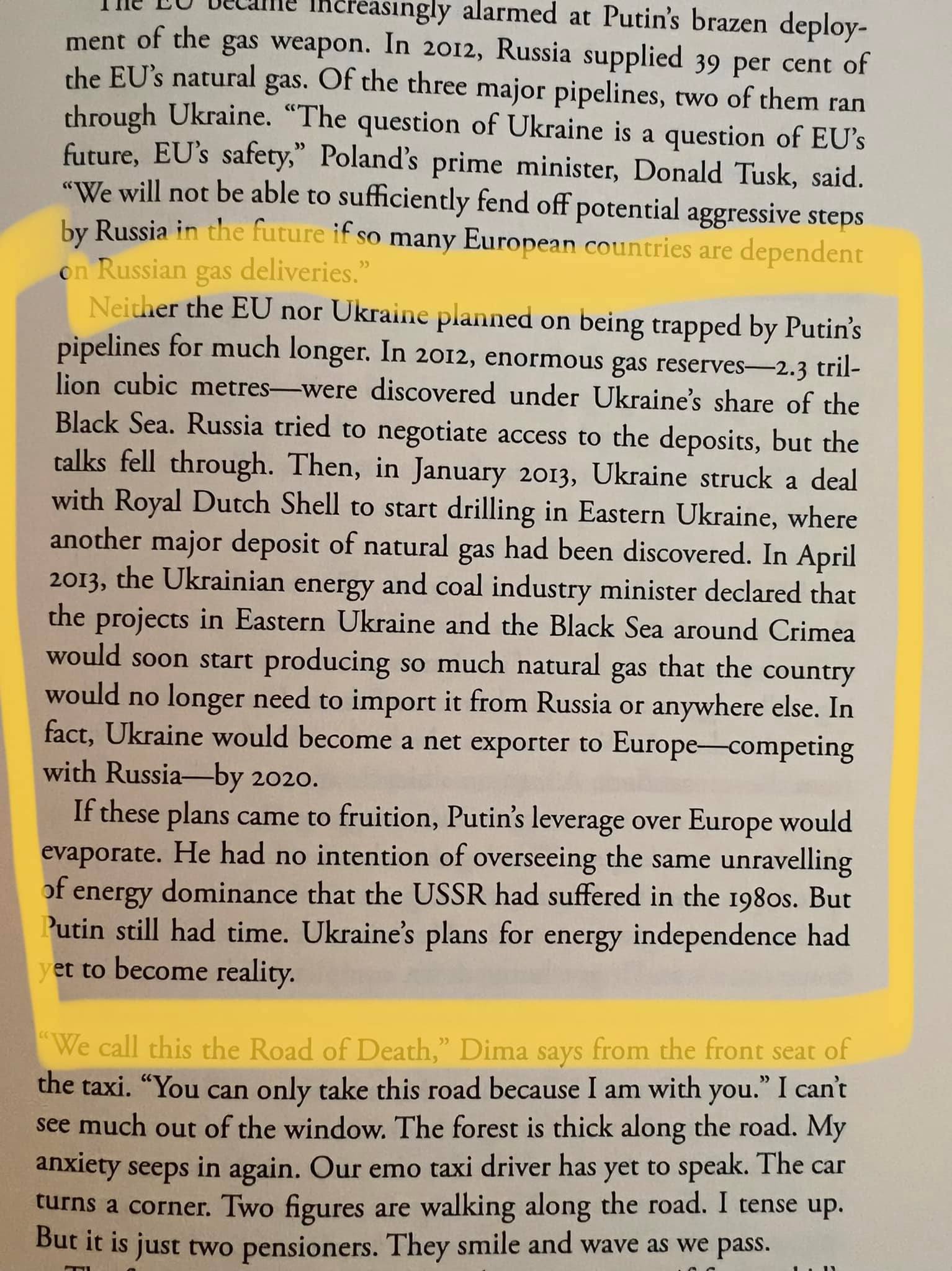
PriceWarsbyRupertRussellThere’s been a lot of speculation as to why Russia has invaded. Some say it’s Putin’s want to recreate the USSR, some say that he’s ill, some say that he’s been poorly advised. The truth is that no one really knows, but one thing did leap out to me from Rupert Russell’s book, “Price Wars“. In fact, it makes so much sense that the media seems to have ignored it for some reason.

Right there is a part of the path for the EU to end dependency on Russian gas and oil, which has become a sudden emergency, with sudden interest in green energy and nuclear energy being spoken of as if these are new ideas. They aren’t. They’re just suddenly very popular because of Putin’s war. In fact, if all of this is true – I don’t know, I’m just grabbing and processing information as I find it and not jumping to conclusions – they should have been much more active in dealing with Ukraine prior to this, but… everyone fears the one who threatens with nuclear weapons. 

In fact, threatening with nuclear weapons is more effective than using nuclear weapons, because when nuclear weapons are used they start flying around and hitting everyone, including those that used them – but if you just threaten to use them, everyone else worries. Everyone is afraid of getting hit. What we forget is that so are the people who threaten to use them. Chemical, Biological… well, this millennium has already seen them used in the conflicts around the world.

In the conflict so far, Russia went for Kyiv but apparently lacked the logistics to get there (“groups of hitchhikers with Russian uniforms are rumored”, Douglas Adams might write), the air supremacy the world expected from Russia didn’t happen, and in what has moved from pleasant surprise to the equivalent of St. Patrick’s Day for Ukrainians becoming every day. World wide, people are cheering the Ukrainians, NATO’s skirting how much it can get away with in supporting Ukraine without giving Putin’s rhetoric about Russia vs. NATO, all seeming to forget that Putin seems to need NATO to prop up his rhetoric. Millions of Ukrainians displaced, talk of the plundering of Ukrainian homes and, yes, the ugly and unconscionable rape of Ukrainian women floating to the top even as Russia strategically withdraws (retreats) from forward positions to consolidate around the Black Sea… the very region mentioned with oil and gas deposits.

All the while, laws were created in Russia to keep dissident’s quiet – if not immediately, later in a prison somewhere. Freedom of the press belongs to those who own the press…. or… can toss people in prison.

So why do I presently think Russia invaded? Well, a look at the map and the knowledge that oil and gas deposits there would threaten Russia’s economic grip on Europe seem to make sense to me. But too, it could be that Putin was advised by a wandering gypsy that it had to happen. I don’t really know.

What I do know.

In listening to Ukrainian journalists talk on Twitter, my takeaway is that they’ve been largely ignored by those reporting on Ukraine. One journalist, well established as those in the conversation were, talked about being asked to do things for free by journalists from other countries, even under the present circumstances when if you want news from Ukraine, you should probably be listening to a Ukrainian. Contrast that with “If you want news about Russia, don’t listen to Russia. And nobody else seems to know much either!”.

I’ve been reading a lot from Ukraine, certainly their politicians – most of whom are women, with President Zelensky delivering masterful oratory across the globe, sharpened or blunted accordingly for each audience. The sanctions imposed we hear about are talked about loudly as, ‘crippling’, but how crippling can they be when the cost of the war for Russia works out to how much they’re still being paid for in oil and gas. Some nations ride the fence, like India and China, which will probably get them sore crotches.

Globalization has been a rougher ride for some than others, politics makes for strange bedfellows and this global fetish of petroleum products that some say started in 1846 when Abraham Gesner invented kerosene for lighting fluid… or the oil strike at Spindletop by Antun Lučić and Texan Patillo Higgins. 122 or 176 years, depending on how much you want to argue about it. I can’t name a war that didn’t happen in my adult life that didn’t have oil involved.

Am I right? I don’t know, but in listening to Ukrainians on Twitter, aside from what should be patently obvious war issues – if you support Russia in this, I expect you may need a ‘special operation’ – there seems to be a longstanding issue of Russian colonialism that I have been almost completely blind to, and perhaps you have as well. The colonialism and oil factors do fit together, but the oil and gas itself has not been discussed on Twitter that much which either makes it an elephant in the room no one is talking about, or a part of a larger issue (such as colonialism), or may not be something Ukrainians even consider to be the issue at all for reasons that I do not yet know or understand. And with such a horrific war going on, with informational wars going both ways (it should be clear that I do support Ukraine’s sovereignty and their repelling of invaders!), it’s clear that absolutely nothing is clear except this simple and irrefutable truth:

Ukaine is a sovereign nation with the democratic ideals that many of us have grown up with as a beacon on the horizon that we almost never see in every day life, and Russia is actively trying to not only undo it but seems intent on erasing and replacing with it’s own narrative.

Beyond Ukraine

We have seen this before in my lifetime. There is no way we can forget the invasion of Iraq, a parallel we Americans tend to forget and some would even deny. We tend to sweep Israel and Palestine under the rug too, and the mess that the world has made in Syria defies understanding. Why is this important? The United Nations, of course. Where Russia has a seat, so does the United States, and in a moment of casting stones it’s hard to look around and see Saints.

Beyond Ukraine, beyond the EU, this could well be a turning point on our planet. It could be where the International Criminal Court, which is gaining prominence in the light of the Ukrainian conflict, is more recognized. It could be that the United Nations could become more than a tired chess game of limited moves if you’re not on the Security Council. It could mean that maybe it’s time for our planet to get beyond the scarring of humanity’s puberty and get to young adulthood.

To do what is necessary for Ukraine, it seems we must do what is necessary for the world.
The price being paid in Ukraine is something that we cannot permit again, as humanity said after World War II: “Never again”.

Perhaps we will mean it this time, after Ukraine wins – they will win, they must win, and we must collectively make sure that they do.