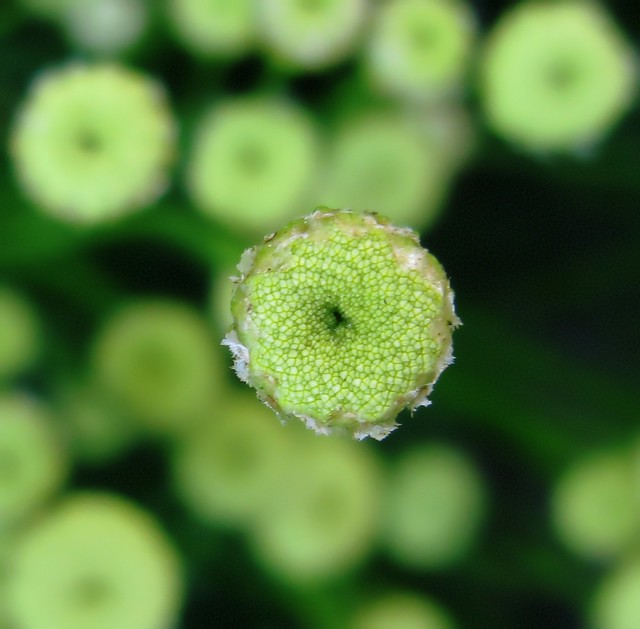
Watching Moss Grow.

One of my more recent interests has been moss. Yes, I know it just lays there, and yes, I know you probably have moss growing in inconvenient places around you, like steps and walkways that aren’t used that much1.

For bonsai, though, it definitely adds a nice touch.

Presently, it’s also been hard for me to find in Trinidad and Tobago. I’m sure that there’s moss somewhere, though the heat and lack of rain haven’t had any I could find near me, or so I thought.

I spoke with the guy who cuts the grass in the compound – he’s pretty passionate about growing things himself, so we share knowledge. I asked him about it, and it happened he knew 2 spots on the compound where I could find moss, so I went and seemingly rescued some dried moss. There wasn’t much of it.

It made sense that I might have to grow my own moss. It shouldn’t be hard, it always seemed to be present to be removed in my teenage years. In searching the Internet I found there’s an annoying amount of marketing content in the search results with little to no actual scientific stuff2. I did glean some anecdotal information here and there and have a few moss propagation projects underway, which I hope will show progress in 30 days.

In researching all of that, though, I found that moss gets it’s nutrients through the air and produces quite a bit of oxygen. As it happens, it seems to be a pretty important part of our ecosystem that people overlook. I wondered about it filtering air, and I found that there are projects already underway testing that very thing – though moss doesn’t appear in NASA’s list of air cleaning plants.

It slows erosion. And, honestly, I have never personally found it disturbing to look at.

Take a look at this project in London – they say that the moss in the city bench absorbs as much carbon as 275 trees in 1% of the space. That’s impressive.

Yet in Trinidad, it’s supposed to be wet season and it hasn’t been very wet at all. The weather pattern here no longer seems to have as much of a wet and dry season as it does a less dry and dry season alternating randomly with a less wet and flash flooded season.

Suddenly, my moss project became an indicator of weather patterns and climate change that is hotly shouted down by some and resolutely upheld by science. Largely it’s the same battle that Claire Patterson fought regarding lead poisoning, where public opinion is swayed by marketing and lobbying rather than science.

How does a decrease in moss during drought conditions in the tropics impact global air quality?

I have no idea. I couldn’t find papers on it. Seems like something someone should be checking out.

And that’s why I haven’t been writing. Moss ended up being very interesting.

1Incidentally, I always suggest taking the mossy walkways and steps. At some point something was important enough for people to go there that went away, and it’s a fun mystery to solve.

2Maybe that’s the reason people are becoming gibbering idiots who can’t make rational decisions.

Into The Flower.

I found myself revisiting a thought from yesterday when I was in conversation with someone who was challenging me on my lack of belief. I had pointed at a flower that happened to be nearby and said, “Most people would just say, ‘Oh, that’s a pretty flower'”, but when I look at it, I know I’m staring at thousands of years of evolution of that flower that it didn’t pick, but the pollinators chose. That there were plants didn’t make it because they were off a shade of color or shape from what we see now.

The conversation moved on and I didn’t get to finish the thought. I finished it earlier.

Flowers are pretty because pollinators made them so and because we said, “oh, these are pretty” and cultivated them further. So when I’m looking at a flower, I’m looking at seemingly infinite amount of chances to be something else. But these changes to make the flower what it is now came from choices made by more than one species.

Each of those species are affected by seemingly countless factors. Seasons, temperatures, food sources, oxygen levels, rainfall, and species evolution for all of those.

It’s amazing. It’s beautiful to consider, all those little things that made that flower a flower that is appealing to us, and why would it be appealing to us? There’s an interesting question too, maybe that’s how we found the bees to get at their honey. I don’t know.

Yes, that is a beautiful flower, and now maybe you’ll see how beautiful they are. They are the survivors our world picked.

For now.

A Quick Note On Fungi.

Fungi have a long history on our planet. We still don’t really understand them as well as we want to or should. They’ve even made their way into science fiction.

Quite a few people didn’t know that the Paul Stamets on Star Trek Discovery was named after the actual Paul Stamets, a mycologist and entrepeneur.

For the record, the mushrooms in this post are AI generated and so don’t believe that they are edible. I’m no mushroom expert.

Watching the BBC’s Earth 2023 today, in Episode 4, Chris Packham talked about the now extinct giant prototaxites that existed 360m-470m years ago. Up to 1 meter (3.25 ft) in diameter, and up to 8 meters (29 feet) tall, they dwarfed plant life for a time until plants took off and relegated the fungi to shadows. They were the tallest fungi ever, as far as we know.

Digging into it, I thought, “What if fungi could eat plastics?”. It ends up that some types of fungi can eat plastics, and the results are also edible.

I’d have thought that would have popped up in one of my feeds. What an amazing planet we live on.

I’d love to get some plastic eating fungi.

Forest and Trees

why hello thereShifting focus is a necessary part of being human – to be able to see the forest and the tree in the forest as needed. Deciding when to do that is a sign of education, discipline and experience. It’s also something that truly creative people can do easily.

Some people see forests, some people see trees, few people see both. Few people can understand a singular tree, how it works even in the most basic of principles – photosynthesis is a rote answer, misunderstood, osmosis is a concept that only can be learned through a permeable membrane. Nutrients, soil types, root types… all are lost if they are not found, and so a person can be limited only to the patently obvious, the growth above the ground.

And then people will look at a forest, not understanding the complex interactions with the pollination vectors, the mycorrhizal networks,  the air flow and the concentrations of different gases during parts of the day when photosynthesis takes place – and when it doesn’t. How the shape of leaves can affect not just how much photosynthesis happens but how water flows through the forest before it even hits the ground. How just as cattle have the cattle egret to keep them clean, there are creatures that keep the plants safe – and then there are creatures that do not, little microcosms of life and death happening at any given moment, an awkward balance shifting in real time. A cycle. Alive in it’s own right, a body of systems, perhaps even a consciousness of sorts that we cannot understand. Religion and fiction have played with this subject.

So, when we look at a problem, we have to understand the tree – each tree. And we also have to understand the forest, the complex interactions between trees and the other flora and fauna around them.

To often we have specialists that do only one or the other; we need people who can do both.