I was reading ‘Social Media Companies Are Having a Bad Moment‘, something written by Nick H. Penniman, who I assume is a GenZ based on the call to action, and I smiled a bit. I can never keep the generations below GenX in any form of structure, which is a failing of mine – these are generations that simply came after mine.
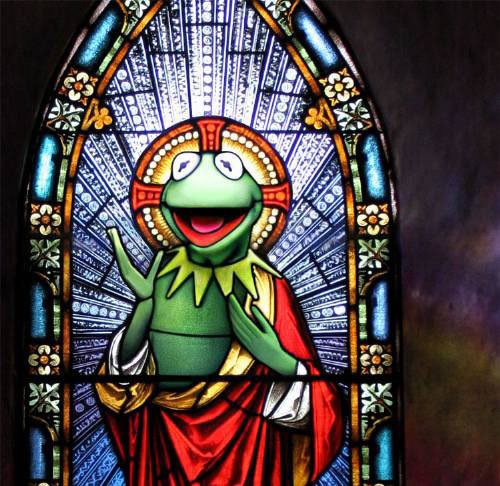
I suppose I could dedicate the time to keep track of which generation is doing what, but I think that’s not time well spent for me. After all, I am of GenX, a Third Culture Kid and a latchkey kid, and I was raised by Kermit The Frog.
I’m gonna let everyone in on a secret: The screens aren’t the problem, social media isn’t the problem, the message is. We can go back and forth about the medium being the message, but it’s a bit simpler than that. This is not to dismiss the concerns expressed in the article but to instead to underline the actual issue.
Every advance in communication technology was disruptive because it changed the way we did things. There was a time when reading a newspaper around others was considered anti-social. Before that were other things, like the printing press and literacy removing power from the literate. These things humanity survived.
What is different now is that during all those communication upheavals, messages got more and more sticky because everyone was trying to sell everyone else their shit. Some of it was good shit. Some of it was bad shit. In fact, there was a time when you could tell how bad a product was by how sticky the marketing was – when I grew up, if I ever did, a good product sold itself. A bad product required a lot more marketing.
Being raised by televisions, I saw a lot of advertisements targeted at me for toys that were shitty. I saved up my allowance and bought some pretty shitty toys and figured out pretty early that all that glitters is not gold. This doesn’t mean I didn’t buy crappy products in my lifetime, but at least I knew the risk.
Where things went off the tracks is Web 2.0 – the focus on marketing. Everybody got on the Internet and started selling good shit and bad shit, but the common denominator was that it was shit. If you look at the companies that survived the DotCom boom, you’ll see that those companies didn’t sell shit. They added value – some of it short-lived, some of it longer lived.
You have to be able to figure out what the shit and the value is. That’s why I wrote about the Red Dots of Life, because everyone wants to twist your ear and fill your eyeballs with their product as much as they can. If they could beam that directly into your head while you were sleeping, they would, because it’s about them. It’s not about you at all.
That’s the trick with social media. It’s about the signal to noise ratio, and the first step in that is deciding what is signal and what is noise. There’s trial and error involved. There’s a need for guidance for the younger generations who are impressionable so that they can tell the difference – and the truth is that even those of my generation and before are susceptible to all of this. In fact, politicians use it to great effect.
When you get on social media, there should be a purpose. In the days of Sesame Street’s first decade, the intent of Sesame Street was simple: Teach kids. Guide kids. And it was done by trustworthy people – to this day, nobody talks about the secret lives of Mr. Rogers and Jim Henson, and all that worked with them. Their intent was clear. They wanted to give us sticky things to help us deal with the world and, more importantly, each other. They showed up once a day and did just that for us, and we had the time to interact with our peers and elders to practice what we were taught – and my generation, the ‘Seen but not heard’ generation, didn’t do too bad despite all the problems we faced.
We did face problems, they seemed insurmountable, but somehow we survived and even thrived enough to scatter our genetics to the next generations. Like every generation before, we screwed you guys up a little. It’s what we do. We’re imperfect as a species, particularly when you get large groups of us together.

But now it’s much more dangerous. Social networks collect so much data about people that the social network companies know more about people than they themselves do – and it’s used for marketing because – guess what – they want to sell you shit. Some of it might be good shit, some of it might be bad shit. The trick is to find where the value is, and that has become more and more difficult.
When you’re young, time is cheap. As you grow older and claim more responsibility, time becomes much more expensive. It’s a part of the generation gap.
If, as individuals, we gravitate to value instead of shit, we can create a valuable world instead of a shitty one. Oh, and ease off those social networks mining your habits. There’s plenty of social media that is decentralized where you can find information, and while the social networks allow connection with others, they do not replace actual connection with others. Time away from the screens is good, but cutting them off entirely is not a good plan.
You are competing with people of your own generation to eek out a living. Those of you that win should be the ones who find value and create value, not sell shit. That’s what every generation seems to consistently get wrong.
As you’ll find, the most dangerous people of generations that came before you – dangerous to you – are the ones that are just selling shit instead of creating value.
It’s harder and harder to tell which is which, but the future of the species depends on every generation getting a decent value-to-shit ratio.
Can I tell younger generations what should be of value to them? Nope. I have some ideas, things related to being able to be do things for yourselves and invest in yourselves rather than just spending money. An hour exploring the thoughts and philosophies of others in classic books isn’t a bad place to start. Finding out why things work or don’t work is always a good thing to do.
But if you find yourself just mindlessly being entertained, that’s a symptom of a larger disease.
When your kids come around, GenZ, it’s gonna be worse. AI is already more persuasive than humans because it learned from our time tested and evolved persuasive communicators.
