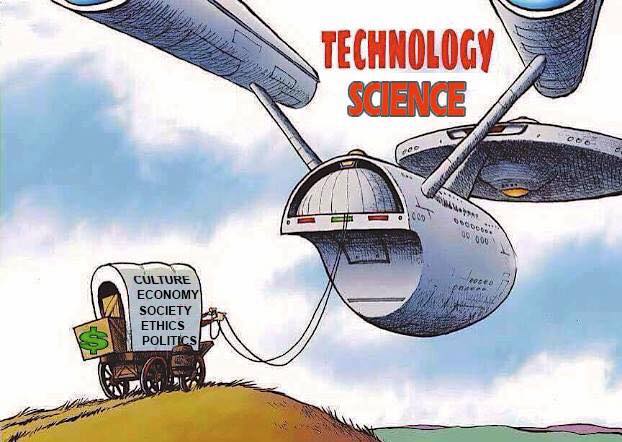
In An Age of Science and Technology…

Much of what I see these days is related to misunderstanding of science and technology.

Years ago, I noted when the automatic transmission was becoming popular, that an increasing number of people were unfamiliar with engine braking – the downshifting of a manual transmission to slow a vehicle. When engine braking, the brake lights don’t come on automatically, just like with an automatic transmission when you let off the gas to slow.

I can’t imagine how many vehicles that engine braked were rear-ended. So I started thinking about why. Why is it that people didn’t understand that other people with manual transmissions engine braked?

Then I helped people with cars, some older than I, and I was shocked to find that many didn’t know the basics of how a car functioned. Before the electronics took over engine control, you just needed to know that an internal combustion engine required spark, air (oxygen) and fuel. If you lacked one of those, the car wouldn’t start – and even today, with all the electronics, that’s true.

I recall as I was getting out of the Navy helping a Navy Chief with an MR2, and I popped the hood (behind the cab) and he started talking about the black round thing. It was the carburetor, where fuel and air mixed, and when I told him that he dismissed it as knowledge he didn’t need despite his car not working. This troubled me. Why would someone dismiss knowledge?

Continue reading
The Mediocrity of Anomancy

A book cover, beige. The title: "Anomancy: A treatise on the reading of the folds and wrinkles of the anuse", by Zhuang Yunfei

Yes, it’s a real book. No, I didn’t read it.

I found it by flipping through reels on Facebook and coming across an author who was pointing it out and saying, “Don’t buy this book, buy my book!” in so many words. I know where she’s coming from, but I also don’t want to tie up her writing with this title though she chose to.

It is, less subtly, a study on assholes.

This it seems is something my social media feeds have been rife with. Not the actual physical anal sphincter, but the relatively new popular way of describing just about anyone that someone disagrees with.

So people are spending a lot of time talking about assholes. We all have probably seen it. Presently, it’s the last few days before an election in Trinidad and Tobago with assholes hiring music trucks to blare their political rhetoric – let’s be kind and call them well intentioned lies for the most part – are attempting to sway voters. Really, they’re just annoying wide swathes of people. They’re assholes. And people will elect… assholes.

If that doesn’t deserve a book, I don’t know what does. That’s something I’d love to read about, but instead I read the symptoms in social media feeds mainly about other assholes. For example, anyone in Donald Trump’s administrative circle are really popular as assholes, and people seem quite happy detailing every little fold, anything that has stuck to it, and if you stay on social media long enough you’ll even catch the scent of assholes.

In the particular instance of Donald Trump, after 100 days, it’s gotten rather pungent.

This is not to say that he and his administration haven’t done some good things, but anything contentious related to Donald Trump’s administration is pretty much about them being assholes, or a withering defense of them not being assholes. In the great debates on social media, it’s basically a grading of how much of an asshole one is in this present administration. I’m not an expert, I wouldn’t want to be, and no, I won’t do an interview on it.

So my feed is basically full of people describing their own version of what an asshole is, and describing it in graphic detail.

What did I do to everyone? Why do they keep showing me assholes at various angles?

In the context of politicians, I pretty much view them all as assholes with rare exception. I can’t think of one right now, even pretending to have a gun to my head. Some might call me jaded, I call it experience.

Anyway. To this Anomancy thing. A study of assholes. I won’t read the book, but I can give you my thoughts on maybe it could be about.

Continue reading

“Free Time”

A friend of mine let slip his thoughts on me having free time because I’m not doing volunteer stuff anymore (and to be fair, he does).

One thing that dancing with mortality does is increase the value of time and thus, how it gets spent. I could go into why we went in different directions, but it boils down to something pretty important:

How I spend my time.

It wasn’t that long ago where I was looking out for the welfare of others through looking out for a piece of property that I have a share of. 1/264th. It was thankless. People would always message me and gripe. And working with other volunteers on their schedules really was putting undue stress on me, particularly when they seemed like tourists because they hadn’t spent as much time as I thinking about issues, or working through them.

When I had the heart attack, it was likely expected that I would have resigned sooner. Instead, I held fast to give the newer volunteers as much time to learn what they needed to, which can be problematic given how much time people have to spend. People volunteer for different reasons, and people dedicate time based on those reasons and the amount of available time they have.

Meanwhile, my own time was ticking away waiting for people to catch up while waiting for paid contractors to do what they were supposed to. There’s only so much one person can hold together. There’s only so much one person can do, and it requires a level of cooperation with me that it seemed like it had become untenable because apparently my time and energy was not perceived of value enough for people to get it together.

Now I spend my time more thoughtfully, not chasing the whims of a her of cats as I got to get them across the river. Was it a failure on my part? Sure, the same way any part wears out. We are all parts of things that wear out.

But is my time less valuable? Not to me. I ration it out, reading and writing, interacting and – presently – making Jambalaya with turkey sausage. I sleep better.

When what you’re doing doesn’t take care of you, it’s time to move on. The time I spend thinking, writing, reading and thinking is of value. If I decide to do nothing for periods of time, that has value.

Given the opportunity, our vampiric society will bleed you dry, leaving you a dried husk of what was once value.

One thing in life everyone should know is that when the cost of the time is higher than the value of that time to yourself, it’s time to stop looking out the window and find the door.

It’s all subjective. You’re the subject.

A Möbius Strip of Consciousness

…We may live our lives in parallel, but at the most fundamental level we experience aliveness alone, in the solitary chamber of the self, our experience a Möbius strip of consciousness folded unto itself, our becoming the most private, most significant work we have…

Walt Whitman On Owning Your Life“, Maria Popova, The Marginalian

I frequently read the Marginalian, not just because the content curation Ms. Popova1 does but because of the inflections she adds. She does a wonderful job, I highly recommend her site. And that quotation stuck with me, and it’s hers.

We all, after all, are the most significant things we create, and the artifacts that we leave behind of that process are landmarks for others. It’s a very individual thing in a society built on averages, with all the red dots of life driving the median to distraction. We like to think it’s all about the majority, but the majority is the median, and the median and the media are closely related2.

And here we are. Individuals, a ‘Möbius strip of consciousness folded unto itself’.

A glow of consciousness emanating from a mobius strip of DNA.

We move through life thinking we’re moving forward—collecting experiences, stacking memories like old stones in a dry riverbed—but there’s something deceptive about that motion. Like time’s pulling us along one side of the strip, and just when we think we’ve reached the edge of understanding, we find ourselves back where we began—but inverted. Different. A shadow of the same shape.

That’s the cruel joke of self-awareness: you believe you’ve changed, evolved, maybe even grown. And in some ways, you have. But the thoughts loop. The questions loop. The pain loops. The pleasure loops. Everything loops.

Folded onto itself, this strip of mind doesn’t give us escape, just another revolution. And the more conscious we become of that loop, the harder it is to pretend there’s a destination.

Maybe that’s why so many people cling to their distractions. Maybe that’s why the world loves the illusion of straight lines and sharp endings—birth, work, death. No one wants to admit that consciousness is a surface with no clear inside or outside. No one wants to trace the fold and feel themselves disappear into it.

I used to think clarity was the goal. Now I wonder if it’s just the moment when you can see the fold, just for a second, before it folds you back in. Isn’t that clarity? Is that dispelling the illusion of freedom?

If you’re lucky, maybe you don’t fight it. Maybe you just trace your path on the strip, knowing it’s the same path that everyone walks—some aware, some not. Maybe you find peace in the paradox.

Or maybe, like me, you stay awake at night wondering if the Möbius strip was ever really meant to be unfolded, or whether the concept of folding itself is an underlying problem.

  1. Mrs.? I don’t know, that’s really her business isn’t it? If she is married, her husband doesn’t write what she does, so what she writes is hers, right? I think so. She’s a singular in her writing as far as I can tell. ↩︎
  2. You can chase down the etymology here, if you’re enough of a geek. From the word ‘median‘ to the word ‘media‘, which takes you down a small rabbit hole. ↩︎

The Illusion Of Freedom

Imagine. Imagine a world you are wandering through and everyone you know, everyone you see, is in restraints that you can see. Over time, as you look over the faces, you realize that most people can’t see their restraints, particularly the happy ones. Some are fighting against the restraints, if even they can’t see them.

One by one you look at them. Your mother, your father, your best friend… all in restraints of their own making. You’re the only one free to wander around, it seems. Do you attempt to free them? Are you the sort of person who would try?

Maybe you do try to free them. Maybe you realize you can’t free the ones that are happy, that they like their restraints.

The angry ones have complex restraints, where if they fight against them they can’t get out of them. The harder they fight, the more tight the restraints become.

The sad ones don’t fight at all, locked into a position with desolate eyes staring at things you can’t see.

At some point, you begin wondering how you’re free and they aren’t. How is it that you’re the only one wandering around? How is it that you’re the only one that’s free?

It dawns on you.

You’re restrained by trying to help them get out of their restraints.

The Tyranny Of The Average

A glowing human asking a digital oracle for guidance

We live our own lives. That should be obvious.

But somehow, somewhere between data aggregation and cultural indoctrination, the world forgets that.

Each of us carries our own memories, our own traumas, our own cracked lenses through which we make sense of this absurd little ride called life. We navigate with different maps, drawn by different hands, scarred by different histories. And yet—society runs on a strange presumption: that there is an “average” human experience, and that this average should be the baseline for everything.

Urban planning, education, employment, healthcare, media—nearly all of it is calibrated to an imaginary person stitched together from statistical norms. Not a real person. A concept. A demographic Frankenstein, sewn together from bits and pieces that some committee decided to measure. A tyranny of averages from a society of averages.

To fit in we’re expected to be mediocre. A lot of people excel at that. Some of us don’t.

Writing Update

"If no one comes from the future to stop you from doing it, how bad can it be?"

One of the reasons I haven’t been publishing as much largely because I’ve been working on writing follow ups to ideas, etc. They linger at times as I reach for that one right way to write it.

Ahh, screw it. Sometimes I want to write about something else.

So I’m taking off the self-restraints on that and going back to my old ways – I think of it as my feral ways. My feral posts that accumulate on my websites awaiting an audience in a world that is in love with a new oracle.

So I’ll be writing more frequently, I think, though to be honest having excuses not to write was sort of comfortable.

Now if you excuse me, I have to go water a cactus.

Conditioning

Yesterday, before a medical appointment and later a friend, the electricity went away for a few minutes. Sitting at my desk, I felt a surge of adrenaline. My mind wanted me to do something, largely because generally speaking no one does anything where I live in Victoria Keyes other than complain about this or that or the other.

Over the years I had hopped into action, assessing the issue and communicating with everyone on WhatsApp, but since leaving the Board last week I have also left those chats. People, as they say, would have to paddle their own canoes. After all, recent events have me looking at my own well-being. I’ve done my part, from handling and communicating during issues to just putting up with some very self-centered griping from residents.

A Society Built On Averages

Title image for "Uncommon Talents: Gifted children, Prodigies and Savants" from 1998, Scientific American, by Ellen Winner

At the turn of the millennium, I read something that made so much sense to me that I built a bit of a world view on it.

At the time, my life was in upheaval as I chased this software engineering job and that, and I didn’t have time to flesh it out for others to understand. I couldn’t even remember what the article was, so when I did have time, I couldn’t refer back to it. Recently, after the heart attack and dealing with the bureaucracy of getting a triple bypass (no joy yet) I subscribed again and dived into the Scientific American archives. I found it.

The article is found in Scientific American1 Special Edition – 1998 Volume 09, No 4 – “Exploring Intelligence” – it’s written by Ellen Winner, and is titled “Uncommon Talents: Gifted Children, Prodigies and Savants”.

One of the interesting things raised by the article was – is – that society is not designed for outliers. In the great bell curve of society, society is designed for the majority– which is around the median.

Deleted Room of the Mind

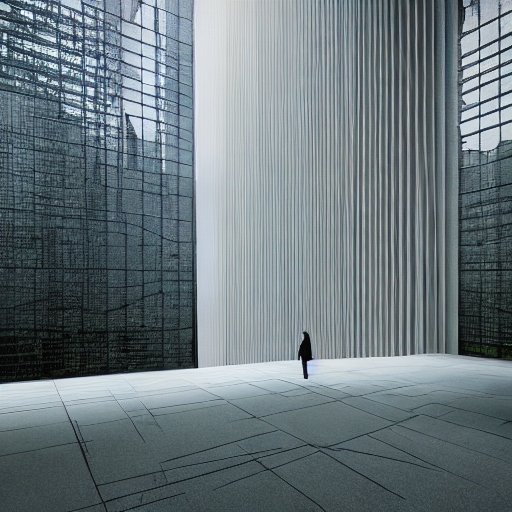
A man in a vast, empty room

There are rooms in my mind, full of thoughts and questions, doors slightly open so my mind can access them like playing an instrument. It’s nice when things are like that.

It’s nice when you can do that.

Then you have people you encounter and have to deal with in one form or another who don’t realize the depth in there, which for the most part is fine. The smart ones in time figure out that there is depth there. There are some that don’t, that are too busy admiring themselves in the mirror they mistake me for.

I’ve been mistaken for a lot of people, from doctors to lawyers to engineers, from CFOs to CTOs to even a few politicians, the worst of the lot. It’s a gauge, really, to let me know how they should be treated. I’m certain you’ve seen it, when someone projects onto you, or mistakes you for someone you aren’t by assuming intentions or motives.

You want to talk about an identity issue? That’s an identity issue everyone encounters to varying degrees.

These are the people who, when given the opportunity, will leave things in the sanctity of the rooms in my mind – the sterile and clean areas. Sometimes it’s something good that gets in there, sometimes it’s bad, and in a world that’s increasingly trying to sell you short of yourself to sell you stuff to ‘complete’ yourself…

Eviction notices must be served, the garbage found and tossed – there are no ‘recyclables’ here, just the ‘null’ of emptiness.

I did this just this past week with something I had been volunteering to do and found myself increasingly weighed down by those who weren’t pulling their weight or blaming others for not doing their jobs. Except this time, instead of sifting through the room, I simply sent the room into the void.

It’s a level I rarely have used, but the level of toxicity warranted it, particularly after the heart attack. It hit a tipping point, a point of no return, and it was done with great thought though it was also done decisively as others would see it. I’d been weighing it since the previous weekend, and sometimes the world makes up your mind for you as you see things as they are.

I know I made a difference here and there with what I did, but the cost has been too high.

Today I vacuumed, steam mopped and cleaned the kitchen and foyer while doing laundry, and as I was halfway done making the bed I found myself winded. Whether or not I get that triple bypass is really about dealing with dueling bureaucracies and a person who has lived a life ‘in between’, and that process is about like making a bed after cleaning the kitchen and foyer.

So, I deleted a room in my mind which was taking up resources. This, when done, leaves people wondering how I just walked away.

And I’m not there to answer. ‘Cause I’m dealing with other stuff I think is more important.