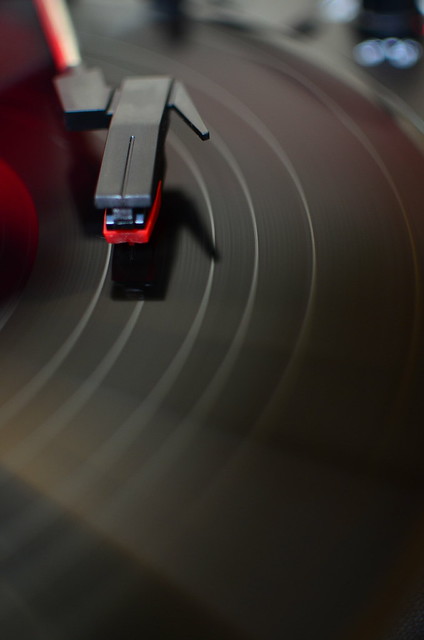
It disturbs me a little that there are people out there right now that have never physically browsed books, or music.
I would spend a lot of time in particular wandering bookstores, looking for things to read. Harold Bloom’s quote comes to mind; “We read, frequently if not unknowingly, in search of a mind more original than our own.”
In the 1980s, I would frequent a bookstore in Trinidad – Manhin’s – on High Street in San Fernando, checking to see if the new Byte magazine, Compute! magazine, etc, would show up and when I did, I invariably picked up other books. It was never time wasted and, even if I didn’t buy some of the books, browsing them made me aware of other aspects of the world. Neil deGrasse Tyson pitches it to businesses as not making as much money if people cannot browse, but the benefit for the consumer is not that businesses can make more money but that consumers can get things that they want or need.
Thrift stores were a special kind of fun for me, before Walmart took over the United States, because you could find some really good stuff in them – including books, books that were cherished by someone, books that were kept on a bookshelf over years and sometimes decades because to them, there was something important in that book that they wanted to be able to revisit.
That seems lost now. In fact, bookstores have become more like Amazon with ordering specific books to sell based on what is popular when I’ve found some of the most interesting books aren’t popular. It used to be that you would walk into a bookstore, the smell of paper and ink permeating the place- some that traded in used novels smelled of old newsprint paper – and you got a feeling that you might find something. A good book found was like an archaeological find in an excavation.
Largely, we’ve lost that. Algorithms have taken away the discovery of our ‘B-Sides’, and feeding artificial intelligences on our habits, likes and dislikes, leaving our lives to be victimized by our options not just in politics but in everything. Everything is marketed, everything about our habits of looking are tracked and recorded, implicitly telling us we should be what we were instead of what we could become.