I wrote about safe spaces for a few reasons, the foremost being I think the phrase is being used conveniently sometimes. Not all the time, mind you, I believe people should have safe spaces, but there’s a downside to them as well.
It wasn’t a mistake that I shifted the perspective to corporations making safe spaces for themselves as a matter of convenience – we just don’t call them that. Maybe we should. There’s breathing space, and there’s “I need this air more than you will”.
The reality is that we all live in our own little prisons. Physiologically, we’re limited by what we can perceive through our senses and understand through our intellect.
Emotionally, it’s not too different. How do you describe love to someone who has not loved or been loved? Hatred? Rage? Depression? Our perspectives are limited by what we ourselves have experienced. We know certain things about the effects of these emotions, but we don’t truly understand these emotions unless we have felt them at least to some degree.
“Without consideration, without pity, without shame
they have built great and high walls around me.And now I sit here and despair.
I think of nothing else: this fate gnaws at my mind;for I had many things to do outside.
Ah why did I not pay attention when they were building the walls.But I never heard any noise or sound of builders.
Walls, Constantine P. Cavafy
Imperceptibly they shut me from the outside world.”
There’s been quite a bit of analysis of Cavafy’s poem, most related to ostracism of homosexuality in the 19th century, but it applies well beyond that as this paper tickles at:
“…This is a poem that could just as easily have been written today, by any one of millions of people in a whole range of shamefully isolating scenarios, across the globe…”
“Thinking Walls: Reflections on a theme by C. P. Cavafy“, Jen Harrison, 2006: Culture and Memory Special Edition, Modern Greek Studies (Australia and New Zealand)
Safe spaces are pointless without unsafe spaces, just as short people make tall people possible. I’m certainly not advocating unsafe spaces – instead, I’m saying that the whole definition of a safe space is based on what makes people feel unsafe. What makes people unsafe varies.
Politically, we hear a lot said about safe spaces from the left and right. The left wants to protect them at all costs, the right wants to get rid of them altogether – but both sides seem to infringe the basic principle that we need both.
I have had the luxury and tyranny of ‘safe space’ for the last 4 years in many regards. I have had the ability to remain in solitude and to truly look at my version of the world that I share bits of here and there, minimizing the effects of advertising and marketing by not having cable and instead watching what I want, when I want. I read what I want, when I want.
This created some poor habits, too – it came at costs. Even as a teenager, though, I recognized that there is no true freedom, there are only more spacious and comfortable prisons that we all aspire to, be it physical, mental or emotional or any combination of the three.
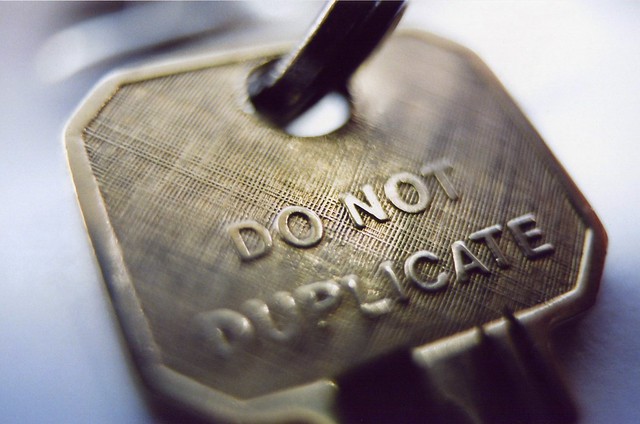
The trick is to hold your own key wherever you are. To be willing to go outside of the safe space, the comfort zone, and to find a better prison. Just as we negotiate with the world, we negotiate with our past, our present and our future.
We grow stronger from adversity at a cost, and the value should be a more comfortable prison or the key, if we do not yet have it. The problems arise when we don’t have the key, or worse, that we don’t know that there is a key to find.
Stretch. Find yourself out of your comfort zone with something, anything, no matter how small it is. Grow.